

THE DROWNED TRUTH
"In Harrow’s Reach, secrets are as old as the cliffs that guard it, etched into the very stones, whispered by the wind that howls through the abandoned streets. People tell themselves they’ve moved on, that the past is something they can leave behind. But the town is haunted by memories, by the things lost at sea, and the stories that remain untold. As I dug deeper, I began to realize that the truth, like the tide, never stays still. It crashes against the shore, relentless, pulling everything into its depths whether the town is ready or not."
An upcoming dark, coastal mystery where the past never stays buried.
WELCOME TO HARROW'S REACH.
The town crouches against the cliffs. The salt-laden air clings to the weathered buildings, their facades worn smooth by relentless wind and time. The cobbled streets gleam with rain, slick and uneven beneath hurried footsteps. Wooden signs creak on rusted chains, shop windows clouded by time rather than dust. The harbor groans with the weight of old secrets.
The sea is never silent here. It crashes against the jagged cliffs like a restless beast, carving its will into the stone. The tide returns what it chooses. Bodies, wreckage, empty ships.
The people of Harrow’s Reach do not speak of certain things. They know better than to ask why some boats never come back, why others return empty, or why the widows stand at the cliffs, waiting long after their mourning should have ended. The church bells toll for the lost, yet the town continues on, as it always has. Unchanged. Unyielding. Bound to something deeper than the tide.
Those who come to Harrow’s Reach seeking answers rarely find what they’re looking for. But the town is always watching. And the sea never forgets.


“The people of Harrow’s Reach don’t ask too many questions, and they don’t offer too many answers. They carry their history the way the sea carries the dead. Quietly, relentlessly, never letting go. Outsiders think it’s secrecy. But here, we know better. It’s survival.”
THE FISHING INDUSTRY
Harrow’s Reach was built on the sea. Long before the roads were paved or the houses stood firm against the wind, there were boats, small, wooden things, carved by hand and sent out onto the restless waves. Generations of fishermen have made their living here, rising before dawn, hauling in their catch with calloused hands, and returning home with the scent of salt and fish clinging to their skin. It’s an old craft, passed down like an heirloom, and every man who sets foot on a trawler carries the weight of his ancestors behind him.
Fish is the town’s livelihood, its backbone. The docks are never quiet, always humming with the low murmur of men mending nets, the scrape of knives against scales, the rhythmic slap of fish tossed into barrels. The market thrives on the daily catch, haddock, mackerel, sometimes even something rarer, something that makes the buyers lean in close, whispering amongst themselves. The town survives because of the sea, and everyone here knows it.
The children grow up watching, learning. They sit on the worn wooden planks of the docks, dangling their legs over the edge as they watch their fathers, uncles, and grandfathers gut fish with the ease of men who have done it a thousand times before. They chase each other between stacked crates and coiled ropes, playing their games beneath the watchful eyes of the old fishermen. Someday, many of them will take up the trade themselves. Others will leave, but the salt air will never quite wash off.
But for all the ways the sea sustains them, no one swims. No one dares wade into the water, even on the hottest summer days. The shore is lined with jagged rocks, the tides unpredictable, but there’s something else, an unspoken rule, passed from mother to child in hushed tones. The ocean is not meant for playing. It gives, but it also takes.


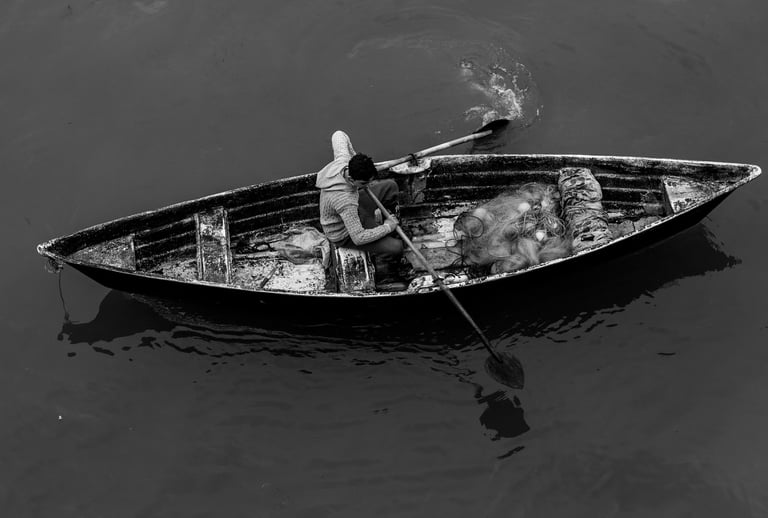
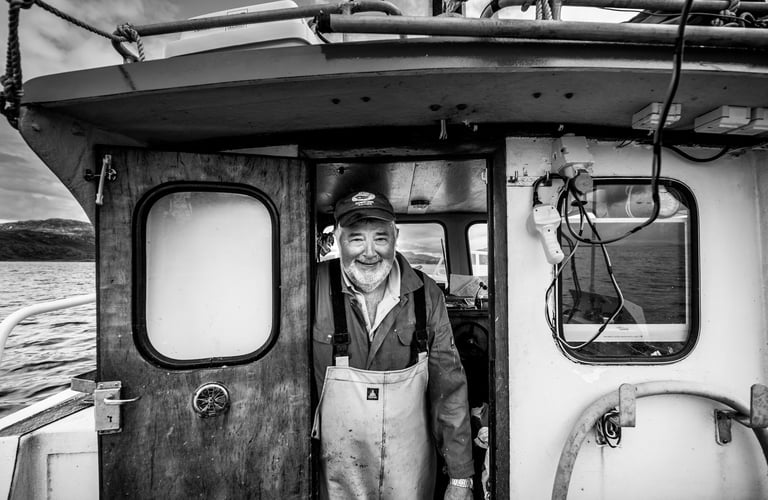
"You don’t learn the ocean from books. You learn it from the feel of the tide under your boat and the way the wind shifts before a storm."
Theodore Beck never imagined he'd end up in Harrow's Reach, a small coastal town far from the bustle of city life. As an investigative journalist, he’s always found himself drawn to places with something it's trying to hide. Which is why when he's sent out on a ferry to the seemingly boring little town, he isn't exactly excited.
The mayor, eager to revive the town’s fading charm and attract tourists, sees Theo as the perfect writer to paint Harrow’s Reach in a new light. She wants Theo to write about the town’s quaint coastal appeal, its rich history, and its hardworking fishermen, promoting it as the ideal getaway for those seeking a quiet escape. To the mayor, Theo is the key to a prosperous future, one where Harrow’s Reach isn’t just a forgotten relic but a thriving haven for visitors.
He arrives in Harrow’s Reach under the pretense of writing a feature on a struggling but hopeful town. But the town isn’t just struggling. It’s haunted, not by ghosts, but by something deeper. The townspeople whisper behind closed doors, eyes flickering to the sea like it might be listening. Something has happened here, and Theo intends to find out what.
THEODORE BECK


But Harrow’s Reach is a place where the past is buried deep, and secrets don’t stay afloat for long. The people here don’t take kindly to outsiders prying into their affairs. The mayor insists the town is thriving, the sheriff warns him not to go stirring up trouble, and the fishermen speak in half-truths and superstitions. Theo has spent his life exposing cover-ups, but for the first time, he feels like he might be the one who’s out of his depth.
